

Can a multiple drug test be done on blood?
Hey there! I'm a supplier of multiple drug tests, and I often get asked if a multiple drug test can be done on blood. Well, the short answer is yes, it can. But there's a lot more to it than just that simple yes.
Let's start by understanding what a multiple drug test is. A multiple drug test is designed to detect the presence of more than one type of drug in a person's system. This can be really useful in a variety of settings, like workplaces, schools, and even in legal cases. It helps to quickly and efficiently figure out if someone has been using drugs, and which ones specifically.
Now, when it comes to using blood for a multiple drug test, there are some pros and cons. First off, the advantages. Blood is a pretty reliable sample for drug testing. It can show a very accurate picture of what drugs are in a person's body at the moment of testing. Unlike urine, which can sometimes give false positives or negatives due to various factors like hydration levels or the presence of certain substances, blood is more direct. It can detect drugs that might not be as easily detectable in urine, especially those that are rapidly metabolized or have a short half - life.
For example, some drugs like cocaine and its metabolites can be detected in blood for a relatively short period after use. This can be crucial in situations where you need to know if someone has been using drugs very recently. Blood tests can also detect the actual amount of the drug in the system, which can be important in determining the level of impairment.
But there are also some downsides to using blood for multiple drug testing. One of the biggest issues is the invasiveness. Drawing blood requires a trained professional, usually a phlebotomist, to use a needle to collect the sample. This can be uncomfortable and even a bit scary for some people. It also poses a risk of infection if not done properly.
Another drawback is the cost. Blood tests are generally more expensive than urine tests. There are costs associated with the collection process, the equipment needed, and the laboratory analysis. This can be a significant factor, especially for large - scale testing programs.
In addition, the turnaround time for blood test results is usually longer. Urine tests can often provide results in a matter of minutes, especially with Multi - drug Rapid Test Device (Urine). On the other hand, blood samples need to be sent to a laboratory, and it can take days to get the results back.

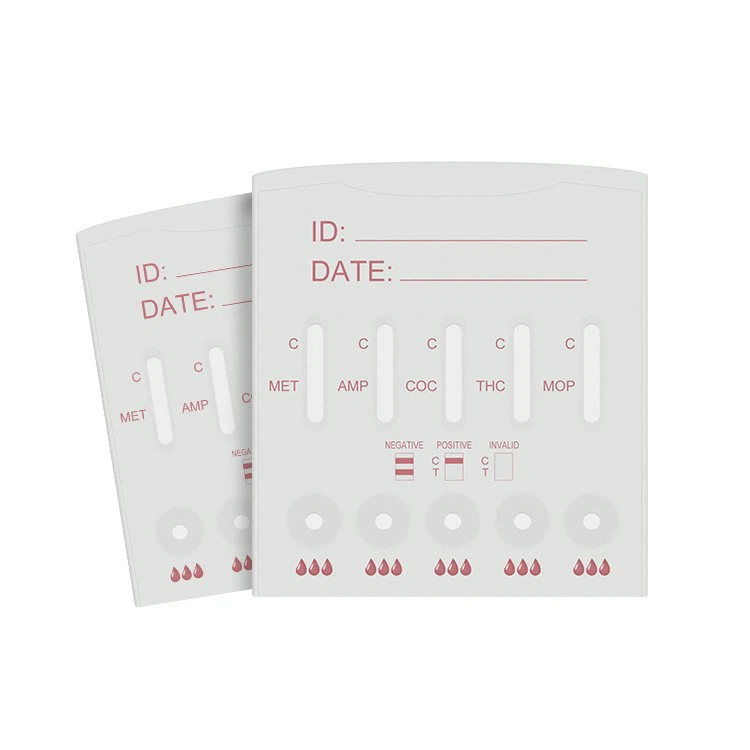
So, when is it a good idea to use blood for a multiple drug test? Well, in some legal cases, blood tests are preferred because of their accuracy. For example, in DUI (Driving Under the Influence) cases, blood tests can provide more concrete evidence of drug use at the time of driving. In medical settings, if a doctor suspects a patient is under the influence of multiple drugs and needs to quickly and accurately assess the situation, a blood test might be the way to go.
On the other hand, urine tests are great for pre - employment screening, random workplace testing, and school drug testing programs. They are less invasive, more cost - effective, and can give quick results. For instance, our Multiple Drug Test Cup is a popular choice for these types of settings. It can detect multiple drugs simultaneously in a simple and convenient way.
Let's talk about the different drugs that can be detected in a multiple blood drug test. Commonly tested drugs include marijuana, cocaine, amphetamines, opioids, and Ecstacy (MDMA). Each drug has a different detection window in blood. For example, marijuana can be detected in blood for up to a few hours to a couple of days after use, depending on the frequency of use. Cocaine can be detected for a few hours, while opioids like heroin can be detected for up to 24 - 36 hours.
The process of a multiple blood drug test usually starts with the collection of the blood sample. As I mentioned earlier, this is done by a trained professional. The sample is then sent to a laboratory, where it goes through a series of tests. First, there's usually a screening test, which is a quick and relatively inexpensive way to check for the presence of drugs. If the screening test is positive, a confirmatory test is done. This is a more accurate and specific test that can confirm the presence of the drug and identify the exact type and amount.
In conclusion, while a multiple drug test can definitely be done on blood, it's not always the best option. It has its place in certain situations where accuracy and recent drug use detection are crucial. But for most general testing needs, urine tests are often a more practical choice.
If you're in the market for multiple drug testing products, whether it's urine - based or you have a specific need for blood - based testing, we're here to help. We have a wide range of high - quality products that can meet your requirements. Whether you're a business owner looking to implement a drug - free workplace policy, a school administrator concerned about student safety, or involved in a legal or medical setting, we can provide the right solutions for you. Feel free to reach out to us to discuss your needs and start a procurement discussion.
References
- Drug Testing: Principles and Practice, by Barry Goldberger and Marilyn H. Huestis
- Forensic Toxicology, by Steven M. Karch