

Prostate cancer is one of the most common cancers among men, and early detection plays a crucial role in successful treatment. The PSA (Prostate-Specific Antigen) rapid test has emerged as a potential tool for early screening. As a PSA Rapid Test supplier, I am often asked whether this test can effectively detect prostate cancer. In this blog, I will delve into the science behind the PSA rapid test, its capabilities, limitations, and its role in prostate cancer detection.
Understanding PSA and Its Significance
PSA is a protein produced by the prostate gland. In healthy men, small amounts of PSA are present in the blood. However, certain conditions, including prostate cancer, can cause an increase in PSA levels. Elevated PSA levels can also be due to non-cancerous conditions such as benign prostatic hyperplasia (BPH) or prostatitis. Therefore, PSA is not a specific marker for prostate cancer, but rather a general indicator of prostate health.
The PSA test measures the amount of PSA in the blood. Traditionally, PSA testing has been performed in a laboratory setting, which can take several days to get the results. The PSA Rapid Test, on the other hand, provides results in a relatively short time, usually within minutes. This makes it a convenient option for point-of-care testing, especially in settings where immediate results are needed.
How the PSA Rapid Test Works
The PSA Rapid Test is a lateral flow immunoassay. It works by using antibodies that specifically bind to PSA. A small amount of blood is applied to the test strip, and if PSA is present in the blood, it will bind to the antibodies on the test strip. This binding reaction produces a visible line on the test strip, indicating the presence of PSA. The intensity of the line can be used to estimate the PSA level in the blood.
The test is simple to perform and does not require specialized equipment or training. It can be used in a variety of settings, including clinics, doctor's offices, and even at home. This accessibility makes it a valuable tool for early screening, especially in areas where access to laboratory testing is limited.
Can the PSA Rapid Test Detect Prostate Cancer?
The PSA Rapid Test can detect elevated PSA levels, which may be associated with prostate cancer. However, it is important to note that an elevated PSA level does not necessarily mean that a man has prostate cancer. As mentioned earlier, non-cancerous conditions can also cause PSA levels to rise. Therefore, a positive PSA Rapid Test result should be followed up with further testing, such as a prostate biopsy, to confirm the presence of cancer.
On the other hand, a negative PSA Rapid Test result does not completely rule out the possibility of prostate cancer. Some men with prostate cancer may have normal PSA levels, especially in the early stages of the disease. Therefore, the PSA Rapid Test should be used as part of a comprehensive screening strategy, along with other tests and risk assessment tools.
Advantages of the PSA Rapid Test
One of the main advantages of the PSA Rapid Test is its speed. Results are available within minutes, which allows for immediate decision-making. This is particularly important in situations where prompt treatment is needed. For example, in a rural clinic where patients may have to travel long distances to get laboratory test results, the PSA Rapid Test can provide timely information and potentially save lives.
Another advantage is its convenience. The test can be performed at the point of care, eliminating the need for patients to wait for days or weeks for their results. This can reduce anxiety and improve patient compliance with screening programs. Additionally, the PSA Rapid Test is relatively inexpensive compared to traditional laboratory testing, making it a cost-effective option for mass screening.
Limitations of the PSA Rapid Test
Despite its advantages, the PSA Rapid Test has some limitations. As mentioned earlier, it is not a specific test for prostate cancer. A positive result may be due to non-cancerous conditions, leading to unnecessary anxiety and further testing. On the other hand, a negative result does not guarantee the absence of cancer, which may give patients a false sense of security.
The accuracy of the PSA Rapid Test can also be affected by various factors, such as the quality of the test kit, the skill of the person performing the test, and the storage conditions of the test kit. Therefore, it is important to use high-quality test kits and ensure that the test is performed correctly.
The Role of the PSA Rapid Test in Prostate Cancer Screening
The PSA Rapid Test can play an important role in prostate cancer screening, especially in resource-limited settings. It can be used as a first-line screening tool to identify men who may be at risk of prostate cancer. Men with a positive PSA Rapid Test result can then be referred for further testing, such as a prostate biopsy, to confirm the diagnosis.
In addition to screening, the PSA Rapid Test can also be used for monitoring the progress of prostate cancer treatment. Changes in PSA levels over time can indicate whether the treatment is effective or if the cancer has recurred.

Other Rapid Tests Offered
In addition to the PSA Rapid Test, we also offer other rapid tests that are useful for early disease detection. For example, the Cardiac Troponin I Rapid Test Device is used for the rapid detection of cardiac troponin I, a biomarker for heart damage. This test is important for the early diagnosis of acute myocardial infarction (heart attack).
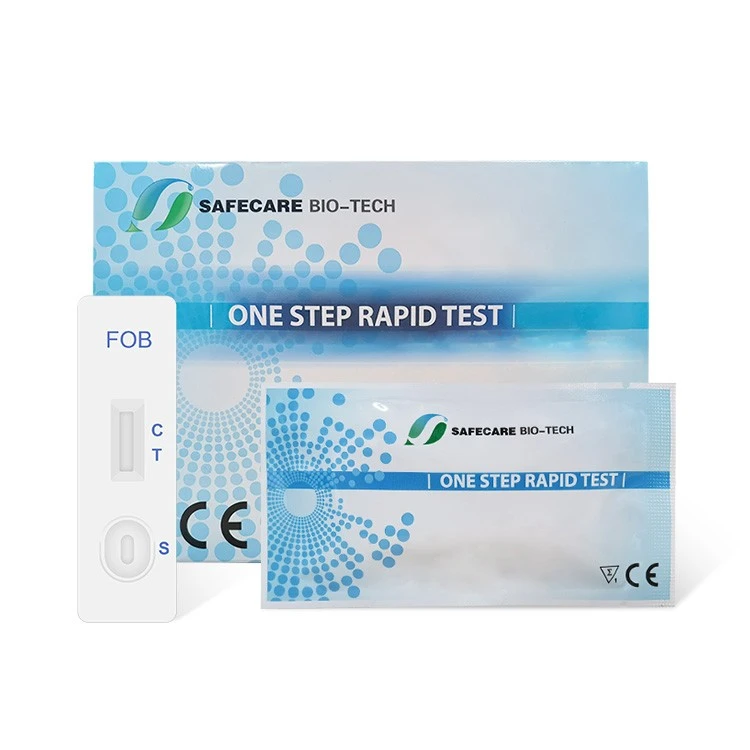
Another test we offer is the Faecal Occult Blood Test, which is used for the detection of hidden blood in the feces. This can be an early sign of colorectal cancer or other gastrointestinal disorders.
Conclusion
The PSA Rapid Test is a valuable tool for the early detection of prostate cancer. It provides quick and convenient results, making it suitable for point-of-care testing. However, it is important to understand its limitations and use it as part of a comprehensive screening strategy. If you are interested in our PSA Rapid Test or other rapid tests, please feel free to contact us for more information and to discuss procurement options.
References
- Catalona WJ, Partin AW, Slawin KM, et al. Use of the percentage of free prostate-specific antigen to enhance differentiation of prostate cancer from benign prostatic disease: a prospective multicenter clinical trial. JAMA. 1998;279(11):1542-1547.
- D'Amico AV, Whittington R, Malkowicz SB, et al. Biochemical outcome after radical prostatectomy, external beam radiation therapy, or interstitial radiation therapy for clinically localized prostate cancer. JAMA. 1998;280(11):969-974.
- Thompson IM, Pauler DK, Goodman PJ, et al. Prevalence of prostate cancer among men with a prostate-specific antigen level < or =4.0 ng per milliliter. N Engl J Med. 2004;350(22):2239-2246.