

Breastfeeding is a beautiful and natural process that nourishes a new life while also bringing about significant physiological changes in a woman's body. One common question that many breastfeeding mothers have is whether they can use an ovulation test, specifically the One Step LH Ovulation Test, during this period. In this blog post, we'll delve into the science behind ovulation, how breastfeeding affects it, and whether it's possible to use the One Step LH Ovulation Test while breastfeeding.
Understanding Ovulation and LH
Ovulation is a crucial part of the menstrual cycle when a mature egg is released from the ovary. This typically occurs around the middle of a woman's menstrual cycle, but the exact timing can vary. Luteinizing hormone (LH) plays a key role in this process. A surge in LH levels triggers the release of the egg from the ovary, which is why detecting this LH surge is the basis for most ovulation tests.
The One Step LH Ovulation Test is designed to detect the presence of LH in a woman's urine. When the test detects a significant increase in LH levels, it indicates that ovulation is likely to occur within the next 24 - 36 hours. This information can be valuable for women who are trying to conceive or simply want to understand their menstrual cycle better.
The Impact of Breastfeeding on Ovulation
Breastfeeding can have a profound effect on a woman's reproductive system. The hormone prolactin, which is responsible for milk production, can suppress the release of other hormones that are necessary for ovulation. This is known as lactational amenorrhea, a natural form of contraception where a woman's menstrual cycle is temporarily halted due to breastfeeding.
However, the degree to which breastfeeding suppresses ovulation can vary from woman to woman. Some factors that influence this include the frequency and intensity of breastfeeding, the age of the baby, and whether the baby is exclusively breastfed. As a general rule, the more frequently and intensively a woman breastfeeds, the more likely she is to experience lactational amenorrhea.
Can You Use the One Step LH Ovulation Test While Breastfeeding?
The short answer is yes, you can use the One Step LH Ovulation Test while breastfeeding. However, there are some important considerations to keep in mind.
Firstly, as mentioned earlier, breastfeeding can suppress ovulation. If you are experiencing lactational amenorrhea and your body is not ovulating, the test may consistently show negative results. This doesn't mean that the test is not working; it simply reflects the fact that your body is not producing the LH surge associated with ovulation.
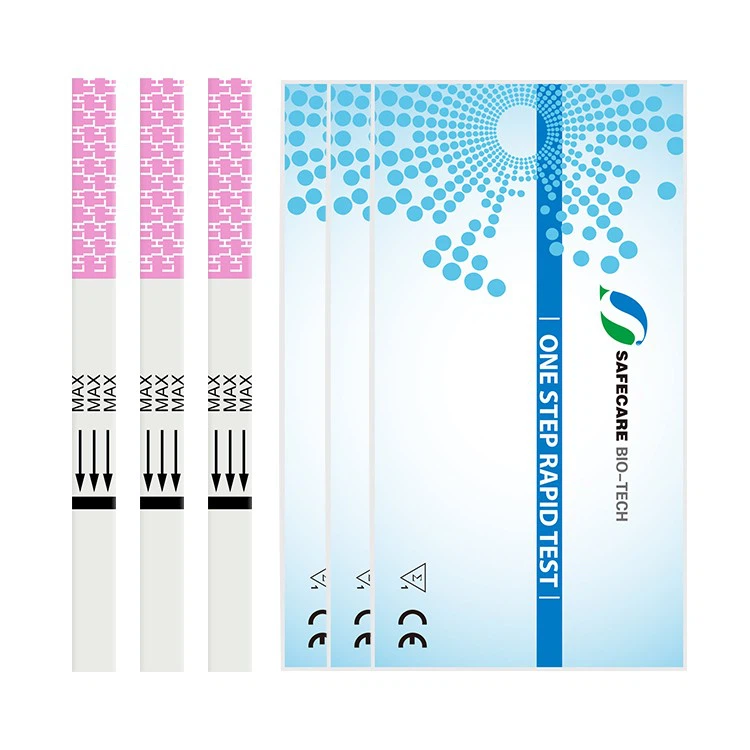

Secondly, hormonal fluctuations during breastfeeding can be unpredictable. Even if you are breastfeeding, your body may start to resume ovulation at any time, especially as your baby gets older and breastfeeding patterns change. This means that you may get false negatives or false positives on the ovulation test. A false negative could occur if the LH surge is too low to be detected by the test, while a false positive could be due to hormonal imbalances caused by breastfeeding.
Tips for Using the One Step LH Ovulation Test While Breastfeeding
If you decide to use the One Step LH Ovulation Test while breastfeeding, here are some tips to help you get the most accurate results:
- Timing is Key: Try to test at the same time each day, preferably in the afternoon or early evening. This is because LH levels tend to be more stable during this time.
- Follow the Instructions: Make sure to read and follow the instructions provided with the test carefully. This includes the proper way to collect the urine sample and how to interpret the results.
- Be Patient: It may take a few cycles to get a clear picture of your ovulation patterns. Don't be discouraged if you get inconsistent results at first.
The Importance of Understanding Your Body
Whether you are breastfeeding or not, understanding your body's natural rhythms is essential for overall health and well - being. Using an ovulation test like the One Step LH Ovulation Test can be a useful tool in this process. It can help you identify when you are ovulating, which can be important for family planning, whether you are trying to conceive or avoid pregnancy.
For breastfeeding mothers, it's also important to remember that lactational amenorrhea is not a foolproof method of contraception. Even if you are not having regular periods, you can still ovulate and become pregnant. Using an ovulation test can give you a better understanding of your fertility status and help you make informed decisions about contraception.
Why Choose the One Step LH Ovulation Test?
As a supplier of the One Step LH Ovulation Test, we are proud to offer a high - quality, reliable product. Here are some of the reasons why our test stands out:
- Accuracy: Our test is designed to detect even small increases in LH levels, providing accurate results you can trust.
- Ease of Use: The test is simple to use, with clear instructions and easy - to - read results. You don't need any special skills or equipment to use it.
- Affordability: We believe that every woman should have access to reliable reproductive health products. That's why our One Step LH Ovulation Test is priced competitively.
Contact Us for Procurement
If you are interested in purchasing the One Step LH Ovulation Test for your personal use, or if you are a retailer, distributor, or healthcare provider looking to stock our product, we would love to hear from you. We offer a range of procurement options to suit your needs, and our team is dedicated to providing excellent customer service. Please reach out to us to start a discussion about your procurement requirements.
References
- Speroff L, Glass RH, Kase NG. Clinical Gynecologic Endocrinology and Infertility. 7th ed. Lippincott Williams & Wilkins; 2005.
- Dewey KG. Influence of breastfeeding on the duration of postpartum amenorrhea. Pediatrics. 1994;93(1):82 - 87.
- Wilcox AJ, Weinberg CR, Baird DD. Timing of sexual intercourse in relation to ovulation. Effects on the probability of conception, survival of the pregnancy, and sex of the baby. N Engl J Med. 1995;333(23):1517 - 1521.