

Hey there! As a supplier of PSA Rapid Tests, I often get asked about how to read the results of these tests. So, I thought I'd take some time to break it down for you in a simple and easy - to - understand way.
First off, let's quickly go over what a PSA Rapid Test is. PSA stands for Prostate - Specific Antigen. It's a protein produced by the prostate gland. Elevated levels of PSA in the blood can sometimes indicate problems with the prostate, like inflammation, an enlarged prostate, or even prostate cancer. Our PSA Rapid Test is a quick and convenient way to get an initial indication of PSA levels.

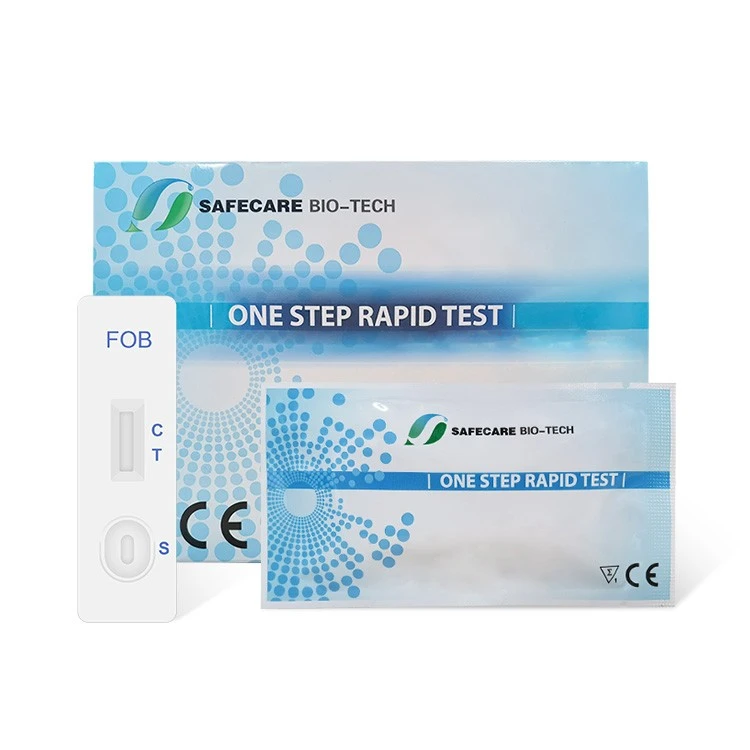
How the PSA Rapid Test Works
The PSA Rapid Test is a lateral flow immunoassay. Sounds complicated, but it's actually pretty straightforward. You take a small blood sample, usually from a finger prick. Then, you add the blood sample to the test device. The test strip inside the device has antibodies that are designed to bind to PSA. If PSA is present in the blood sample, it will bind to these antibodies, and a visible line will appear on the test strip.
Reading the Results
There are usually two main areas on the test strip: the control line (C) and the test line (T).
The Control Line
The control line is there to make sure the test is working properly. It should always appear if the test is functioning as it should. If the control line doesn't show up, it means there's something wrong with the test. Maybe the test kit is expired, or you didn't perform the test correctly. In this case, you should discard the test and use a new one.
The Test Line
The test line is what gives you information about your PSA levels.
- Negative Result: If only the control line (C) appears and there is no test line (T), it's a negative result. This generally means that the PSA levels in your blood are below the detectable limit of the test. However, it's important to note that a negative result doesn't completely rule out prostate problems. There could still be issues, especially if you're experiencing symptoms like difficulty urinating, frequent urination at night, or pain in the pelvic area.
- Positive Result: If both the control line (C) and the test line (T) appear, it's a positive result. A positive result indicates that PSA is present in your blood at a level that the test can detect. But again, a positive result doesn't necessarily mean you have prostate cancer. Other non - cancerous conditions can also cause elevated PSA levels, such as prostatitis (inflammation of the prostate) or benign prostatic hyperplasia (BPH, an enlarged prostate).
Sometimes, the test line might be faint. A faint test line still counts as a positive result. It just means that there's a lower amount of PSA in the blood compared to a test with a darker test line.
Factors Affecting Test Results
There are a few things that can affect the accuracy of PSA Rapid Test results.
- Recent Ejaculation: Ejaculation can cause a temporary increase in PSA levels. So, it's recommended to avoid ejaculation for at least 48 hours before taking the test.
- Prostate Procedures: If you've had a prostate biopsy, a digital rectal exam, or a prostate massage recently, these can also elevate PSA levels. It's best to wait a few weeks after these procedures before taking the test.
- Medications: Some medications, like finasteride and dutasteride, which are used to treat BPH, can lower PSA levels. If you're taking these medications, it's important to let your doctor know when interpreting the test results.
Comparing PSA Rapid Test with Other Tests
We also offer other rapid tests, like the Faecal Occult Blood Test and the Creatine Kinase - MB Test. The Faecal Occult Blood Test is used to detect hidden blood in the feces, which can be a sign of various gastrointestinal problems, including colorectal cancer. The Creatine Kinase - MB Test is used to diagnose heart attacks by measuring the levels of a specific enzyme in the blood.
While the PSA Rapid Test is a convenient way to get an initial idea of PSA levels, it's not a substitute for a comprehensive medical evaluation. If you get a positive result on the PSA Rapid Test, it's crucial to follow up with your doctor. Your doctor may order further tests, like a more detailed PSA blood test in a laboratory, a prostate biopsy, or an ultrasound of the prostate.
Why Choose Our PSA Rapid Tests
Our PSA Rapid Tests are designed with high - quality materials and advanced technology. They're easy to use, which means you can perform the test in the comfort of your own home. The results are available in a short time, usually within 10 - 15 minutes. And we ensure strict quality control during the manufacturing process to guarantee the accuracy and reliability of the tests.
If you're a healthcare provider, a pharmacy, or an individual interested in purchasing our PSA Rapid Tests, we'd love to hear from you. Our tests are a great addition to any medical facility or for personal use. They can help in early detection and monitoring of prostate health.
Conclusion
Reading the results of a PSA Rapid Test is not too difficult once you understand the basics. Remember to always check the control line first to make sure the test is working. A negative result doesn't mean you're in the clear, and a positive result doesn't necessarily mean you have cancer. It's all about using the test as a starting point for further medical evaluation.
If you have any questions about our PSA Rapid Tests or need more information on how to use them, don't hesitate to reach out. We're here to support you in your journey towards better prostate health.
References
- "Prostate - Specific Antigen (PSA) Test." American Cancer Society.
- "Understanding PSA Testing." Mayo Clinic.
So, if you're interested in purchasing our high - quality PSA Rapid Tests, just get in touch, and we can start the procurement discussion!